And why we’re using it for the ant colony simulation
For those who may not be familiar with it, Unreal Engine is one of the most powerful and versatile game engines available today. Developed by Epic Games, it’s widely used in the gaming industry to create stunning visuals, immersive experiences, and complex simulations. However, its capabilities extend far beyond just video games. Unreal Engine has been adopted in industries like film, architecture, virtual reality, and even scientific simulations, thanks to its advanced rendering, physics, and simulation tools.
What Makes Unreal Engine Stand Out
- Visual Fidelity: Unreal Engine is known for its ability to create highly realistic environments. Its graphical power allows us to render our ant colony in great detail, from the underground tunnels to the movements of individual ants.
- Real-Time Physics: The engine’s real-time physics capabilities make it ideal for simulating complex environments. In our project, this allows the colony to interact with its surroundings dynamically, whether it’s navigating around obstacles, responding to environmental changes, or defending itself from threats.
- Modular Design: Unreal Engine is extremely flexible, allowing developers to build custom modules or integrate with external systems (like our machine learning framework) with ease. This makes it possible for us to focus on developing the ant colony’s AI separately, while the game engine handles the visuals and world simulation.
Why Unreal Engine is Perfect for the Ant Simulation
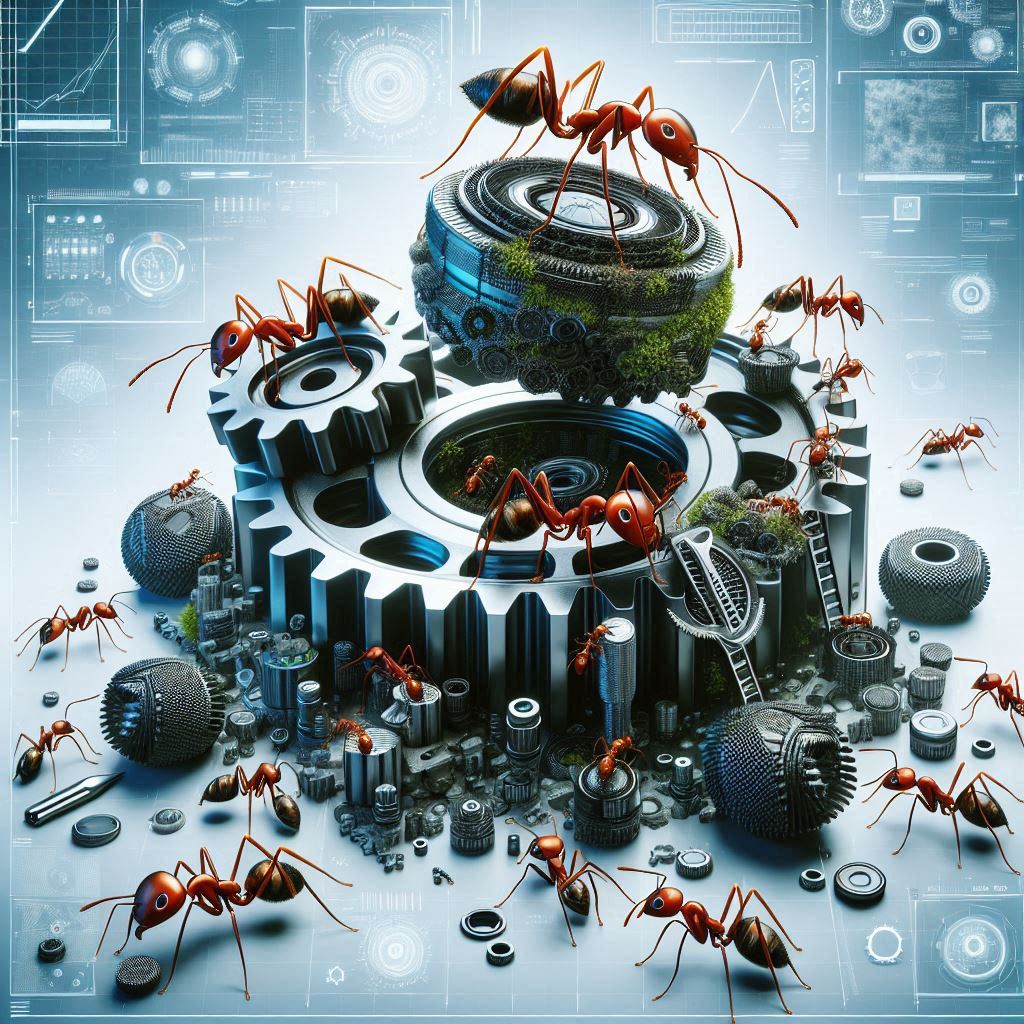
The reason we chose Unreal Engine for this ant simulation project is because it excels at creating immersive, real-time environments. We need to simulate the entire world in which the ants live—the tunnels they dig, the food sources they find, the threats they face—all in a dynamic way that changes over time. Unreal Engine’s capabilities in terms of real-time rendering and physics are perfect for this.
Additionally, its flexibility allows us to decouple the brain of the colony (running in Python) from the body (rendered in Unreal Engine) through socket programming. This setup enables us to easily run complex AI algorithms on the ants’ behaviors while still having a beautifully visualized environment to watch them in.
Ultimately, Unreal Engine lets us push the boundaries of what a virtual ant colony can do, combining state-of-the-art graphics with advanced AI, giving us a platform that can grow and evolve as the project progresses.