How Machine Learning Drives Collective Intelligence
In our ant colony simulation, the “brain” of the colony plays a crucial role. It’s responsible for making all the key decisions, whether it’s about foraging for food, defending against external threats, or adapting to environmental changes. But how does this “brain” function? It’s driven by machine learning, allowing us to simulate a truly intelligent colony.
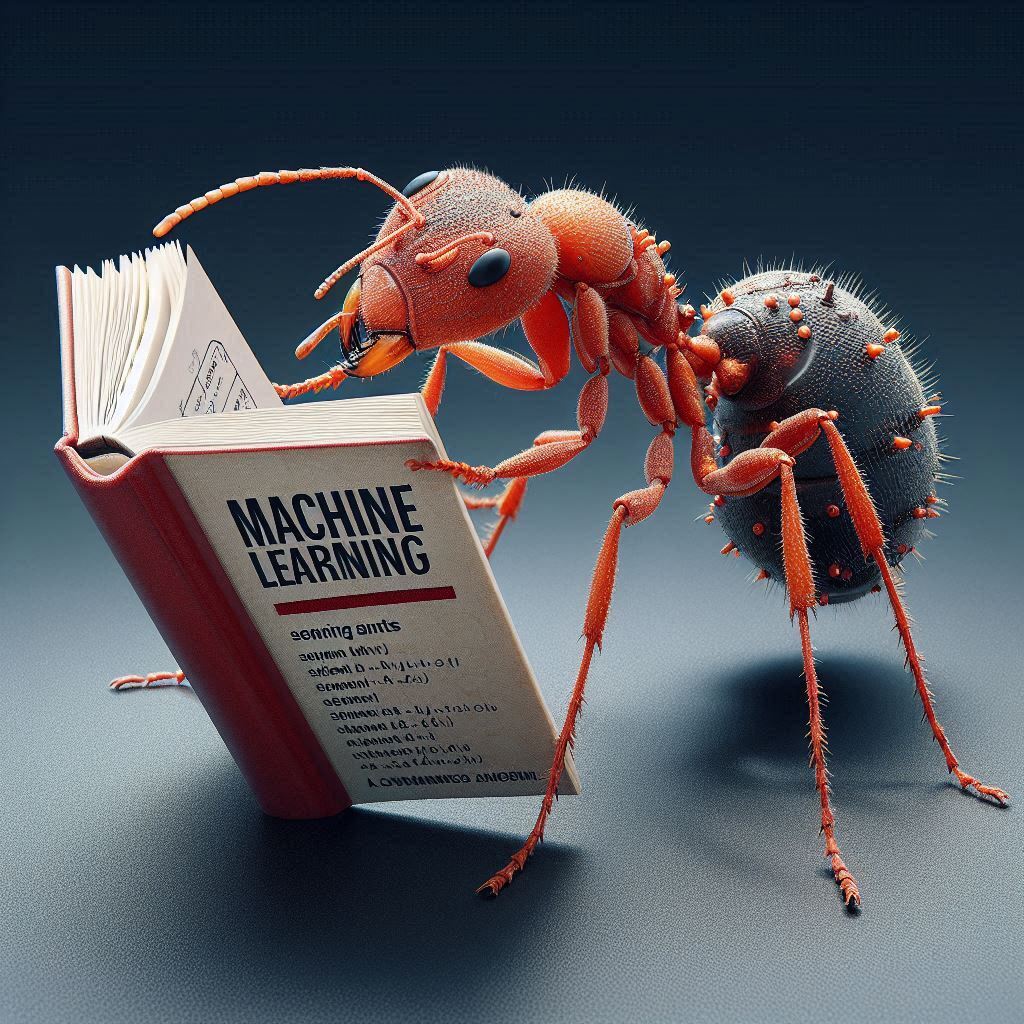
We’re planning to experiment with various machine learning frameworks, using reinforcement learning algorithms to teach the colony how to behave in complex situations. Reinforcement learning is perfect for this, as it allows the colony to learn from its actions, improving its strategy over time based on rewards and penalties.
One of the exciting aspects of this project is how we’ve decoupled the brain from the game engine itself. We will be using socket programming, by which the game engine becomes the colony’s body, while the brain lives separately in Python. The sockets act like the nervous system, transmitting signals back and forth between the Unreal Engine (the body) and the machine learning frameworks (the brain). This setup lets us swap in different machine learning environments—whether it’s TensorFlow, PyTorch, or Flax—without having to modify the core Unreal Engine code. It’s fast, flexible, and incredibly powerful for testing different AI techniques.
By separating these elements, we can iterate quickly, setting up different machine learning environments, experimenting with algorithms, and running simulations without disrupting the overall system. It’s like a living organism where each part has a distinct function, but they all work together seamlessly.
This architecture provides us with the flexibility to test out various ideas and machine learning strategies as the project evolves, allowing our virtual ant colony to become smarter with each new iteration.